
Introduction
In the ever-evolving landscape of business, customer relationship management (CRM) stands as a cornerstone for companies striving to thrive in competitive markets. At the heart of effective CRM lies the art of precision – the ability to segment customers accurately to tailor products, services, and marketing strategies to their specific needs and preferences. In this comprehensive guide, we delve deep into the intricacies of optimizing customer segmentation in CRM, exploring the strategies, tools, and best practices that pave the path to success.
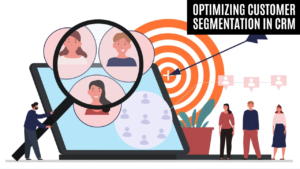
Customer segmentation is the process of dividing a company’s customer base into groups that share similar characteristics. By categorizing customers based on factors such as demographics, behavior, and preferences, businesses can better understand their diverse audience and deliver personalized experiences that drive engagement and loyalty.
Understanding Customer Segmentation
Customer segmentation is a crucial aspect of marketing strategy, allowing businesses to understand their target audience on a deeper level and tailor their approaches accordingly. One of the primary methods of segmentation is demographic segmentation, which involves categorizing customers based on various demographic variables such as age, gender, income, education, and more. This approach provides valuable insights into the socio-economic characteristics of customers, enabling businesses to create marketing messages that resonate with specific demographic groups.
For example, understanding the age distribution of your customer base can help tailor product offerings and marketing campaigns to different age groups. Similarly, considering factors like gender and income levels can further refine marketing strategies to better suit the preferences and purchasing power of different segments within the target audience.
However, demographic segmentation alone may not provide a complete picture of customer behavior and preferences. This is where behavioral segmentation comes into play. Behavioral segmentation focuses on customers’ actions, including their purchase history, frequency of purchases, brand interactions, and engagement with marketing campaigns. By analyzing behavioral data, businesses can identify patterns and trends that reveal valuable insights into customers’ preferences and buying habits.
For instance, analyzing purchase history can help businesses identify loyal customers who frequently make repeat purchases and may benefit from loyalty rewards programs. Similarly, understanding how customers interact with marketing campaigns can inform future campaign strategies, allowing businesses to optimize their efforts and improve ROI.
Moreover, behavioral segmentation allows businesses to personalize their marketing efforts based on individual customer preferences and behaviors. This personalized approach can significantly enhance customer satisfaction and loyalty, ultimately driving long-term success for the business.
Beyond demographic and behavioral data, psychographic segmentation offers an even deeper understanding of customers by considering their lifestyles, values, interests, and personality traits. This approach goes beyond surface-level characteristics to uncover what truly motivates customers and drives their purchasing decisions.
For example, psychographic segmentation can reveal whether customers prioritize convenience over cost, or if they are driven by values such as sustainability and social responsibility. Armed with this knowledge, businesses can tailor their products, messaging, and marketing strategies to align with the specific needs and preferences of different psychographic segments.
Overall, effective customer segmentation requires a comprehensive understanding of the target audience across demographic, behavioral, and psychographic dimensions. By leveraging insights from these different segmentation approaches, businesses can develop more targeted and impactful marketing strategies that resonate with customers on a deeper level, ultimately driving growth and success in today’s competitive marketplace.
The Importance of Precision in Segmentation
Segmentation in marketing is akin to dissecting a complex puzzle into manageable pieces, with each segment representing a unique set of characteristics, preferences, and behaviors among customers. It’s a powerful tool for understanding the diverse needs and desires of a customer base, enabling businesses to tailor their products, services, and marketing strategies accordingly. However, the effectiveness of segmentation hinges greatly on precision – the ability to accurately identify and delineate meaningful differences among customer groups.
At its core, precision in segmentation involves a nuanced understanding of customer demographics, psychographics, and behavioral patterns. This requires careful analysis of data from various sources, including purchase history, demographic information, social media interactions, and more. By delving deep into this data, businesses can uncover subtle distinctions that distinguish one customer segment from another.
One of the dangers of segmentation lies in its potential for inaccuracy or overly broad categorization. When segments are too broad, they fail to capture the unique needs and preferences of individual customers within that group. As a result, marketing efforts targeted towards such segments may miss the mark, leading to wasted resources and missed opportunities. For example, consider a clothing retailer that categorizes its customers simply as “men” and “women.” While this broad segmentation may provide some insight, it overlooks the diversity within each group in terms of age, style preferences, income levels, and more.
On the other hand, overly granular segmentation can also be problematic. When segments are too narrowly defined, businesses risk fragmenting their customer base to the point where it becomes impractical to develop targeted strategies for each segment. Moreover, this level of precision may not always yield meaningful insights, especially if the data used for segmentation lacks depth or relevance. For instance, segmenting customers based on the color of the shoes they bought once might not provide actionable insights for a shoe retailer if it doesn’t correlate with broader shopping behaviors or preferences.
Achieving precision in segmentation requires striking the right balance between granularity and relevance. It involves identifying commonalities and differences among customer groups that are both actionable and meaningful for marketing purposes. This often involves conducting thorough market research, leveraging advanced analytics tools, and incorporating qualitative insights from customer feedback and surveys.
Once meaningful segments have been identified, the next step is crafting targeted strategies that resonate with each segment. This entails developing tailored messaging, promotions, and experiences that speak directly to the unique needs and preferences of each group. For example, a luxury car manufacturer might tailor its marketing efforts differently for segments such as affluent professionals, young families, and performance enthusiasts, recognizing that each group values different aspects of the brand and product.
Precision in segmentation also extends beyond marketing to other areas of the business, such as product development, pricing strategies, and customer service. By understanding the distinct needs and preferences of each segment, businesses can make informed decisions across the entire value chain, ultimately driving greater customer satisfaction and loyalty.
In conclusion, segmentation is a powerful tool for understanding customers, but its effectiveness depends on precision. Inaccurate or overly broad segmentation can lead to missed opportunities and wasted resources, while precise segmentation enables businesses to develop targeted strategies that resonate with each segment. Achieving precision requires a deep understanding of customer data and a nuanced approach to segmentation that balances granularity with relevance. By investing in precision segmentation, businesses can unlock valuable insights and drive success in today’s competitive marketplace.
Strategies for Precision Segmentation
Segmentation is a crucial aspect of marketing strategy, allowing businesses to divide their customer base into distinct groups with shared characteristics and preferences. Precision segmentation involves using advanced techniques, such as data analytics and machine learning algorithms, to ensure that segmentation strategies are highly targeted and effective. Let’s delve deeper into the strategies outlined above and explore how they contribute to precision segmentation.
- Data-Driven Insights: In today’s digital age, businesses have access to vast amounts of data generated by customer interactions, transactions, and behaviors. By leveraging data analytics tools and machine learning algorithms, businesses can extract valuable insights from this data. These insights help identify patterns, trends, and correlations within the customer base, enabling businesses to create more accurate and relevant segmentation strategies.
For example, an e-commerce retailer may analyze purchase history data to identify clusters of customers who frequently purchase certain product categories. This information can then be used to create targeted marketing campaigns or personalized product recommendations for each segment. - Real-Time Personalization: Advances in technology have enabled businesses to deliver personalized experiences to customers in real-time. Through the use of artificial intelligence and predictive analytics, businesses can analyze customer interactions as they happen and dynamically adjust content and offers to match individual preferences and behavior.
For instance, a streaming service like Netflix analyzes user viewing habits in real-time to recommend personalized content based on past preferences and viewing history. This level of real-time personalization enhances customer engagement and satisfaction, ultimately driving retention and loyalty. - Segmentation Based on Customer Lifetime Value (CLV): Not all customers contribute equally to a business’s bottom line. By segmenting customers based on their lifetime value (CLV) – the total revenue a customer generates over their entire relationship with a business – companies can prioritize resources and tailor strategies to maximize return on investment (ROI).
High-value customers, who contribute the most revenue to the business, may receive special treatment such as exclusive offers, personalized services, or access to VIP programs. On the other hand, low-value customers may be targeted with retention campaigns aimed at increasing their lifetime value or preventing churn. - Multichannel Integration: In today’s omnichannel landscape, customers expect a seamless experience across all touchpoints, whether online or offline. By integrating data from various sources, including websites, mobile apps, social media, and physical stores, businesses can create a unified view of the customer journey.
For example, a retail chain may integrate data from its e-commerce platform, mobile app, and brick-and-mortar stores to track customer interactions and preferences across channels. This holistic view enables the business to deliver consistent messaging and offers to customers regardless of the channel they engage with, thereby enhancing the overall customer experience and driving sales.
In conclusion, precision segmentation is essential for businesses looking to optimize their marketing efforts and deliver personalized experiences to customers. By leveraging data-driven insights, real-time personalization, segmentation based on customer lifetime value, and multichannel integration, businesses can create highly targeted segmentation strategies that drive engagement, loyalty, and revenue growth.
Tools for Precision Segmentation
Customer segmentation is a pivotal strategy for businesses seeking to understand and cater to the diverse needs and preferences of their customer base. In today’s data-driven landscape, companies rely on sophisticated tools to achieve precision segmentation, ensuring that marketing efforts are targeted, relevant, and effective. Three key tools instrumental in this endeavor are Customer Relationship Management (CRM) software, Customer Data Platforms (CDPs), and Marketing Automation Tools.
CRM software serves as the cornerstone of customer data management, providing a centralized hub for storing and analyzing valuable information about individual customers and their interactions with the business. These platforms allow companies to capture data across various touchpoints, including sales, customer service inquiries, marketing campaigns, and more. By consolidating data into a single repository, CRM systems offer a comprehensive view of each customer’s journey and preferences.
One of the primary functions of CRM platforms in precision segmentation is the ability to categorize customers based on various criteria, such as demographics, purchase history, engagement patterns, and behavioral insights. Advanced CRM systems leverage sophisticated segmentation tools that enable businesses to create highly targeted customer segments. For example, a retail company may segment its customer base into groups based on factors like age, location, buying frequency, and product preferences. By doing so, they can tailor marketing messages and promotions to resonate with each segment’s unique characteristics and preferences.
Moreover, modern CRM platforms are equipped with predictive analytics capabilities, allowing businesses to forecast customer behavior and identify trends that may influence segmentation strategies. By analyzing historical data and identifying patterns, companies can anticipate future customer actions and adjust their segmentation criteria accordingly. For instance, an e-commerce retailer may use predictive analytics to identify high-value customers likely to make repeat purchases and tailor special offers or loyalty programs to incentivize their continued patronage.
In addition to CRM software, Customer Data Platforms (CDPs) play a crucial role in precision segmentation by aggregating data from multiple sources to create comprehensive customer profiles. Unlike traditional CRM systems, which primarily focus on operational data, CDPs integrate a wide range of data sources, including CRM data, website analytics, social media interactions, and third-party databases. This holistic view enables businesses to gain deeper insights into customer behavior and preferences across various channels and touchpoints.
CDPs excel in creating unified customer profiles by resolving identity discrepancies and stitching together fragmented data silos. By consolidating data into a single source of truth, CDPs empower businesses to deliver personalized experiences at scale. For example, a hospitality company may use a CDP to combine guest reservation data, onsite behavior, and feedback from third-party review sites to create detailed customer profiles. These profiles can then be leveraged to segment customers based on factors such as travel preferences, spending habits, and loyalty status, enabling the company to tailor marketing campaigns and promotions to different audience segments effectively.
Furthermore, Marketing Automation Tools play a critical role in executing precision segmentation strategies by automating repetitive marketing tasks and delivering personalized messaging to segmented audiences. These platforms enable businesses to streamline marketing workflows, such as email marketing, lead nurturing, and campaign management, while also leveraging segmentation criteria to target specific audience segments with relevant content.
Marketing automation platforms leverage segmentation data to deliver highly targeted and personalized communications that resonate with each segment’s unique needs and preferences. For instance, an e-commerce retailer may use marketing automation to send personalized product recommendations to customers based on their past purchase history, browsing behavior, and demographic profile. By delivering relevant content to segmented audiences at the right time, businesses can increase engagement, drive conversions, and ultimately foster long-term customer loyalty.
In conclusion, precision segmentation is essential for businesses looking to effectively engage with their customer base and drive meaningful interactions. CRM software, Customer Data Platforms (CDPs), and Marketing Automation Tools are indispensable tools that empower companies to segment their audiences accurately, deliver personalized experiences, and achieve marketing success in today’s competitive landscape. By leveraging these tools in tandem, businesses can gain deeper insights into customer behavior, optimize their marketing strategies, and ultimately drive growth and profitability.
Best Practices for Precision Segmentation
Segmentation is a crucial strategy for businesses aiming to enhance their understanding of their customers and tailor their offerings to specific segments’ needs and preferences. To execute precision segmentation effectively, several best practices must be followed. These practices ensure that segmentation efforts are aligned with business objectives, validated against real-world data, continually refined, and conducted ethically and responsibly.
- Clear Objectives:
Before initiating any segmentation strategy, it’s imperative to establish clear objectives. These objectives should be aligned with broader business goals such as increasing customer retention, boosting sales, or enhancing customer satisfaction. Without clearly defined objectives, segmentation efforts risk becoming unfocused and ineffective. By setting specific goals and KPIs, businesses can measure the success of their segmentation strategies and ensure that they are driving tangible business outcomes. - Validate Segmentation Criteria:
Once segmentation criteria are established, it’s essential to validate them against real-world data. This involves conducting A/B tests and cohort analyses to assess the accuracy and relevance of the segmentation models. By testing assumptions against empirical evidence, businesses can identify any discrepancies or biases in their segmentation criteria and refine them accordingly. Validating segmentation criteria ensures that the segments accurately reflect the diverse needs and preferences of the target audience. - Iterate and Adapt:
Customer segmentation is not a one-time exercise but an ongoing process that requires continuous iteration and refinement. As market dynamics and customer preferences evolve, segmentation strategies must be adapted accordingly. Monitoring key metrics and soliciting feedback from customers enables businesses to stay responsive to changing trends and preferences. By iteratively refining segmentation models, businesses can ensure that they remain relevant and effective in meeting the needs of their target audience. - Privacy and Ethics:
In an era of heightened concerns about data privacy and security, businesses must handle customer data responsibly and ethically. Obtaining explicit consent for data collection and use is essential to establish trust with customers and comply with regulations such as GDPR and CCPA. Implementing robust security measures protects sensitive information from unauthorized access or misuse. By prioritizing privacy and ethics in segmentation efforts, businesses can build stronger relationships with customers and mitigate risks associated with data misuse or breaches.
In summary, precision segmentation requires careful planning, validation, iteration, and adherence to ethical standards. By aligning segmentation efforts with business objectives, validating segmentation criteria against real-world data, continually refining segmentation models, and prioritizing privacy and ethics, businesses can effectively leverage segmentation to better understand their customers and drive meaningful business outcomes.
Case Studies in Precision Segmentation
Precision segmentation is a vital strategy for modern businesses looking to maximize their marketing efforts and enhance customer satisfaction. Two notable examples of companies excelling in this domain are Amazon and Spotify. Through their sophisticated data analytics and segmentation techniques, both companies have established themselves as leaders in delivering personalized experiences to their users.
Amazon, the e-commerce behemoth, has revolutionized the way consumers shop online by leveraging its vast trove of customer data and advanced recommendation algorithms. Through the analysis of various data points such as past purchases, browsing history, and demographic information, Amazon can create highly targeted segments of customers. These segments allow Amazon to deliver tailored product recommendations, personalized marketing messages, and customized shopping experiences to individual users.
One of the key strengths of Amazon’s segmentation strategy lies in its ability to understand customer preferences and anticipate their needs. By tracking users’ interactions with the platform, Amazon can identify patterns and trends, enabling it to make accurate predictions about future purchases. For example, if a customer frequently buys books on a particular topic, Amazon may recommend related products or suggest new releases in that category.
Moreover, Amazon’s segmentation efforts extend beyond just product recommendations. The company also personalizes the entire shopping journey, from the homepage layout to the checkout process. For instance, returning customers may see personalized greetings or recommendations based on their purchase history, creating a sense of familiarity and enhancing the overall shopping experience.
Additionally, Amazon utilizes segmentation to target specific customer segments with tailored marketing campaigns. By analyzing demographic data and browsing behavior, Amazon can identify niche markets and develop targeted advertising strategies to reach them. This approach allows Amazon to maximize the effectiveness of its marketing budget by focusing on high-potential customer segments.
Similarly, Spotify, the popular music streaming service, employs precision segmentation to enhance user satisfaction and drive engagement. Spotify collects data on users’ music preferences, listening habits, and engagement patterns to create personalized experiences tailored to individual tastes.
One of Spotify’s most notable segmentation strategies is its use of personalized playlists. By analyzing users’ listening history and preferences, Spotify curates custom playlists featuring songs and artists that align with each user’s taste. These playlists not only provide users with a continuous stream of music they enjoy but also introduce them to new artists and genres, enriching their listening experience.
Moreover, Spotify leverages segmentation to recommend new releases and highlight trending tracks to users. By analyzing data on listening trends and user preferences, Spotify can identify emerging artists and popular songs, ensuring that users stay up-to-date with the latest music trends.
Furthermore, Spotify uses segmentation to organize concerts and events based on user preferences. By analyzing data on users’ favorite artists and genres, Spotify can identify locations where these artists are popular and plan events accordingly. This approach allows Spotify to create unique experiences for its users, further enhancing their loyalty to the platform.
In conclusion, Amazon and Spotify are prime examples of companies that have mastered precision segmentation to deliver personalized experiences to their users. By leveraging data analytics and advanced segmentation techniques, both companies can understand customer preferences, anticipate their needs, and tailor their offerings accordingly. As a result, they not only drive engagement and satisfaction but also foster long-term customer loyalty and retention.
Conclusion
In the digital age, precision segmentation has emerged as a critical strategy for businesses looking to differentiate themselves in crowded markets and win the hearts and minds of customers. By harnessing the power of data, technology, and analytics, businesses can unlock valuable insights into customer behavior and preferences, enabling them to deliver personalized experiences that drive engagement, loyalty, and long-term growth. As the landscape of CRM continues to evolve, mastering the art of precision segmentation will be essential for staying ahead of the competition and delighting customers at every touchpoint.