
Introduction
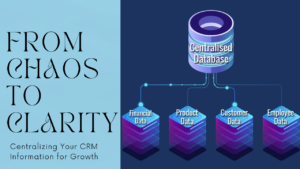
In the ever-evolving landscape of business operations, Customer Relationship Management (CRM) stands as a cornerstone for sustainable growth. However, amidst the vast sea of data and information, many businesses find themselves grappling with chaos rather than clarity. The key to unlocking the true potential of CRM lies in centralizing information, transforming scattered data into actionable insights. This article delves into the transformative power of centralizing CRM information, guiding you from chaos to clarity and paving the path for unprecedented growth.
Navigating the Chaos: Overcoming Fragmented CRM Systems in Business
In the vast landscape of modern business operations, navigating the complexities of customer relationship management (CRM) has become an increasingly daunting task. Picture a scenario where crucial customer data is strewn across disparate platforms, communication channels, and departments within an organization. This fragmented state of affairs is far from uncommon, as numerous businesses grapple with the challenges posed by disconnected CRM systems. The repercussions are profound, with inefficiencies, missed opportunities, and dissatisfied customers emerging as telltale signs of the chaos that ensues.
At the heart of this conundrum lies the absence of a centralized repository for CRM information—a single source of truth that can provide businesses with a comprehensive view of their customer interactions and preferences. Instead, data is scattered like pieces of a puzzle, making it arduous for organizations to glean meaningful insights and make informed decisions.
One of the primary consequences of fragmented CRM systems is the inefficiency that permeates every aspect of operations. Without a cohesive platform to consolidate customer data, employees are left scrambling to piece together information from disparate sources, leading to duplicated efforts and wasted time. For instance, a sales representative may struggle to access historical purchase data while engaging with a client, resulting in a disjointed customer experience and potentially lost sales opportunities. Moreover, the lack of integration between CRM systems and other essential business tools exacerbates this inefficiency, as data silos hinder cross-functional collaboration and hinder productivity.
Furthermore, the fragmented nature of CRM systems often results in missed opportunities to personalize customer interactions and tailor marketing efforts effectively. In today’s hyper-competitive landscape, relevance is paramount, and businesses that fail to leverage customer data to deliver personalized experiences risk falling behind. However, without a centralized repository to consolidate and analyze customer information, organizations are unable to identify patterns, preferences, and trends that could inform targeted marketing campaigns and drive customer engagement. Consequently, they resort to generic, one-size-fits-all approaches that fail to resonate with their audience, leading to diminished brand loyalty and customer satisfaction.
Perhaps most concerning is the impact of fragmented CRM systems on customer relationships. In an era where customer experience reigns supreme, disjointed interactions and inconsistent messaging can erode trust and tarnish brand reputation. Customers expect seamless transitions between communication channels and departments, but fragmented CRM systems often result in disjointed experiences characterized by repeated requests for information and disjointed communication. Consequently, customers become frustrated and disillusioned, prompting them to seek out competitors who can offer a more cohesive and personalized experience.
To overcome the chaos inherent in fragmented CRM systems, businesses must prioritize the implementation of a centralized CRM platform that serves as the backbone of their customer-centric initiatives. By consolidating data from various sources into a single repository, organizations can gain a holistic view of their customers’ journey and preferences, enabling them to deliver personalized experiences at every touchpoint. Additionally, integrating CRM systems with other essential business tools such as marketing automation and analytics empowers organizations to derive actionable insights and optimize their strategies effectively.
Moreover, fostering a culture of collaboration and communication across departments is essential for ensuring the success of CRM initiatives. By breaking down silos and promoting cross-functional collaboration, businesses can ensure that customer data is shared seamlessly across the organization, enabling teams to work cohesively towards common goals. Additionally, investing in employee training and development programs can empower staff to leverage CRM technology effectively, maximizing its potential to drive business growth and customer satisfaction.
In conclusion, fragmented CRM systems pose significant challenges for businesses, hindering efficiency, impeding personalization efforts, and eroding customer relationships. However, by prioritizing the implementation of centralized CRM platforms, fostering a culture of collaboration, and investing in employee development, organizations can overcome the chaos and unlock the full potential of their customer data. In doing so, they can not only enhance operational efficiency and drive revenue growth but also cultivate lasting relationships with their customers built on trust, relevance, and personalized experiences.
The Quest for Clarity
In the ever-evolving landscape of business, where uncertainty and complexity seem to be the only constants, the quest for clarity emerges as a paramount objective for enterprises striving to navigate through the chaos. This pursuit is not merely an aspiration but a strategic imperative, acknowledging the critical role of consolidated Customer Relationship Management (CRM) information in fostering organizational cohesion and resilience.
At the heart of this endeavor lies the recognition of the overwhelming abundance of data scattered across various systems and channels. Customer interactions, sales pipelines, marketing endeavors, and support engagements each generate a stream of information, contributing to the cacophony of data inundating modern enterprises. Amidst this deluge, clarity becomes elusive, hampering decision-making processes and impeding the pursuit of strategic objectives.
Centralization emerges as the guiding principle in this quest for clarity, offering a beacon of coherence amidst the tumultuous sea of data. By consolidating disparate sources of CRM information into a single, cohesive platform, businesses aim to transcend the fragmented landscape and establish a unified repository of insights. This convergence not only streamlines access to critical data but also fosters synergies across departments and functions, catalyzing organizational alignment and efficiency.
The benefits of centralization extend far beyond mere convenience; they encompass a fundamental transformation in the way businesses perceive and engage with their operations and customers. Through the integration of customer interactions, sales pipelines, marketing campaigns, and support tickets, businesses attain a panoramic view of their ecosystem, illuminating previously obscured patterns and opportunities.
At the core of this holistic perspective lies the customer, the focal point around which all business endeavors revolve. By consolidating CRM information, businesses gain profound insights into customer behavior, preferences, and needs, enabling them to tailor their offerings and interactions with unparalleled precision. This intimate understanding transcends traditional transactional relationships, fostering deeper connections and engendering customer loyalty.
Moreover, centralization empowers businesses to orchestrate seamless experiences across the entire customer journey, from initial engagement to post-purchase support. By breaking down silos and fostering cross-functional collaboration, organizations can deliver cohesive and personalized experiences that resonate with customers on a profound level. This not only enhances customer satisfaction but also cultivates advocacy and drives sustainable growth.
Furthermore, the consolidation of CRM information serves as a catalyst for innovation and agility, empowering businesses to anticipate and respond to market dynamics with unprecedented agility. Armed with comprehensive insights, organizations can identify emerging trends, anticipate customer needs, and adapt their strategies in real-time. This proactive approach not only mitigates risks but also positions businesses to seize new opportunities and outpace competitors in rapidly evolving markets.
However, the quest for clarity is not without its challenges. The journey towards centralization requires a concerted effort, encompassing technological investments, organizational realignment, and cultural transformation. Resistance to change, legacy systems, and data fragmentation may pose formidable barriers, necessitating a strategic and holistic approach to implementation.
Moreover, the pursuit of clarity is an ongoing journey rather than a destination, requiring continuous iteration and refinement. As businesses evolve and grow, so too must their CRM strategies, adapting to shifting customer expectations and market dynamics. Thus, the quest for clarity is not merely a one-time endeavor but a perpetual commitment to excellence and innovation.
In conclusion, amidst the chaos of modern business, the quest for clarity emerges as a defining imperative for enterprises seeking to thrive in an increasingly complex and competitive landscape. Through the centralization of CRM information, businesses gain not only operational efficiency and strategic insight but also the foundation for enduring customer relationships and sustainable growth. As they embark on this transformative journey, businesses must embrace the challenges and opportunities that lie ahead, recognizing that clarity is not merely a destination but a continuous pursuit of excellence.
Centralizing CRM: The Catalyst for Growth
Centralizing Customer Relationship Management (CRM) information is not just a logistical move; it’s a strategic decision that can significantly impact a business’s growth trajectory. By consolidating CRM data into a single, unified system, companies can unlock a plethora of benefits that contribute to their overall success. Let’s delve deeper into each aspect:
Streamlined Operations:
Centralization eliminates the chaos that comes with managing fragmented data across multiple systems. When all CRM information is housed in one centralized platform, it streamlines operations by reducing redundancy and inefficiencies. Teams can access the data they need without navigating through various silos, leading to enhanced productivity and collaboration. With streamlined operations, businesses can allocate resources more effectively, optimize processes, and ultimately, operate at peak efficiency.
Enhanced Data Quality:
Fragmented CRM systems often suffer from data inconsistencies and inaccuracies due to disparate sources and manual entry errors. Centralization ensures data integrity by providing a single source of truth. With standardized data formats and validation rules in place, businesses can trust the accuracy and reliability of their CRM information. Enhanced data quality not only instills confidence in decision-making but also minimizes the risk of errors that could lead to costly mistakes down the line.
360-Degree Customer View:
A centralized CRM system offers a holistic view of customers by consolidating data from various touchpoints and interactions. This comprehensive perspective encompasses not only basic contact information but also purchase history, preferences, communication history, and support interactions. With a 360-degree view of customers, businesses can tailor their interactions and marketing efforts to individual preferences, driving personalized engagement and fostering long-term customer relationships.
Improved Customer Experience:
Centralized CRM information is instrumental in delivering exceptional customer experiences. With access to a unified customer profile, support agents can quickly understand a customer’s history and preferences, allowing them to provide tailored assistance and resolve issues promptly. By delivering personalized support and anticipating customer needs, businesses can enhance satisfaction levels and cultivate loyalty. A positive customer experience is crucial for driving repeat business and generating positive word-of-mouth referrals, ultimately contributing to sustainable growth.
Informed Decision-Making:
Data-driven decision-making is a cornerstone of modern business strategy, and centralized CRM information serves as the foundation for this approach. By analyzing comprehensive and accurate CRM data, businesses can extract valuable insights, identify trends, and anticipate customer behaviors in real-time. Armed with this actionable intelligence, decision-makers can make informed strategic decisions, such as launching targeted marketing campaigns, optimizing sales strategies, or introducing new products or services. In a rapidly evolving business landscape, the ability to leverage data for decision-making provides a competitive edge and positions businesses for sustained growth.
In conclusion, centralizing CRM information is not merely a technical optimization; it’s a strategic imperative for businesses looking to unlock untapped potential and drive growth. By streamlining operations, enhancing data quality, gaining a 360-degree view of customers, improving the customer experience, and enabling data-driven decision-making, centralized CRM systems empower businesses to thrive in today’s dynamic marketplace.
Overcoming Challenges
The process of centralizing CRM information undoubtedly offers a plethora of benefits for businesses, but it’s essential to acknowledge and address the challenges that often accompany such a significant transformation. Overcoming these challenges requires careful planning, effective communication, and robust strategies. Let’s delve into each of these obstacles and how businesses can navigate them successfully:
Employee Resistance:
One of the most common challenges in centralizing CRM information is employee resistance. Many employees may be accustomed to using existing systems or processes and may feel apprehensive about the change. Resistance can stem from fear of the unknown, concerns about job security, or simply a reluctance to adapt to new technologies or workflows. To overcome this challenge, businesses must prioritize effective change management strategies. This includes transparent communication about the reasons for centralization, involving employees in the decision-making process, and providing ample training and support to help them navigate the transition. By addressing employees’ concerns and demonstrating the benefits of centralization, businesses can mitigate resistance and foster a culture of acceptance and collaboration.
Technical Hurdles:
Implementing a centralized CRM system often involves complex technical processes, such as data migration, integration with existing systems, and customization to meet specific business needs. Technical hurdles can arise due to compatibility issues, data migration errors, or challenges in ensuring seamless integration with other business applications. To overcome these hurdles, businesses should invest in comprehensive planning and collaboration between IT teams, vendors, and stakeholders. Thorough testing and validation processes are essential to identify and address any technical issues before full deployment. Additionally, leveraging the expertise of experienced professionals and seeking support from CRM vendors can help navigate technical challenges effectively.
Data Security and Privacy Concerns:
Centralizing CRM information raises valid concerns about data security and privacy, especially in light of increasing regulations such as GDPR and CCPA. Businesses must ensure that sensitive customer data is adequately protected throughout the centralization process. This includes implementing robust security measures, such as encryption, access controls, and regular audits, to safeguard against data breaches or unauthorized access. Additionally, businesses should establish clear policies and procedures for data handling and compliance with relevant regulations. Transparent communication with customers about data privacy practices and obtaining explicit consent for data collection and processing can help build trust and mitigate privacy concerns.
In summary, while centralizing CRM information offers significant benefits for businesses, it’s crucial to acknowledge and address the challenges that may arise along the way. By prioritizing effective change management, collaborating closely with stakeholders, and implementing robust technical and security measures, businesses can successfully overcome obstacles and unlock the full potential of centralized CRM systems. Ultimately, navigating these challenges requires a proactive and strategic approach, guided by a commitment to driving positive outcomes for both the business and its customers.
Case Studies
Centralizing CRM information has proven to be a transformative strategy for companies seeking to improve efficiency, enhance customer satisfaction, and drive growth. The case studies of Company A and Company B provide compelling examples of the tangible benefits that can be realized through centralization.
Company A faced challenges stemming from disparate CRM systems scattered across different departments. This fragmented approach hindered their ability to gain a unified view of their customers, resulting in inefficiencies and inconsistencies in operations. By centralizing CRM information onto a single platform, Company A experienced a remarkable 30% increase in operational efficiency. This improvement can be attributed to the elimination of redundant processes, streamlined workflows, and enhanced collaboration enabled by having all relevant data consolidated in one accessible location. Additionally, the centralized approach led to a notable 20% boost in customer satisfaction scores, indicating that providing a cohesive and personalized experience to customers became more achievable with a comprehensive view of their interactions and preferences.
Similarly, Company B recognized the imperative of enhancing its customer experience to remain competitive in their market. Through centralization efforts, they achieved a significant 25% reduction in response times. This improvement directly contributed to a notable enhancement in customer retention rates, as customers received faster and more efficient support and service. By consolidating CRM information, Company B was able to streamline communication channels, improve access to customer data, and empower their support teams to resolve issues promptly, thus fostering stronger customer relationships and loyalty.
To replicate and maximize the benefits observed in these case studies, businesses embarking on centralization initiatives should adhere to several best practices:
- Define Clear Objectives: It’s crucial to establish clear goals and objectives for centralizing CRM information, ensuring alignment with broader business strategies. Whether the focus is on improving operational efficiency, enhancing customer experience, or enabling data-driven decision-making, having clearly defined objectives provides a roadmap for success.
- Engage Stakeholders: Involving key stakeholders from across the organization in the decision-making process is essential for garnering buy-in and support for centralization efforts. Effective communication about the benefits and implications of centralization helps foster a collaborative approach and ensures that the initiative meets the diverse needs of different departments and teams.
- Choose the Right Technology: Selecting a CRM platform that aligns with the specific needs and requirements of the business is paramount. Considerations such as scalability, integration capabilities, user-friendliness, and customization options should inform the decision-making process to ensure that the chosen technology adequately supports the organization’s centralization objectives.
- Prioritize Data Security: Centralizing CRM information necessitates robust security measures to protect sensitive customer data and ensure compliance with relevant regulations such as GDPR and CCPA. Implementing encryption, access controls, regular audits, and data governance protocols helps mitigate the risk of breaches and instills confidence in customers regarding the protection of their personal information.
- Provide Ongoing Training: Empowering employees with the necessary skills and knowledge to leverage the centralized CRM system effectively is essential for maximizing its benefits. Comprehensive training programs, user guides, and ongoing support mechanisms help ensure that employees understand how to navigate the system, utilize its features optimally, and extract valuable insights to drive business outcomes.
In summary, centralizing CRM information can yield significant improvements in operational efficiency, customer satisfaction, and retention rates, as demonstrated by the experiences of Company A and Company B. By adhering to best practices such as defining clear objectives, engaging stakeholders, choosing the right technology, prioritizing data security, and providing ongoing training, businesses can position themselves for success in leveraging centralized CRM systems to unlock untapped potential and drive growth.
Conclusion
From chaos to clarity, the journey towards centralizing CRM information is transformative. By consolidating scattered data into a single source of truth, businesses unlock new opportunities for growth, innovation, and customer satisfaction. Embrace the power of centralization, and embark on a path towards a brighter, more prosperous future for your business.